Blockchain Interoperability: Connecting Multiple Networks
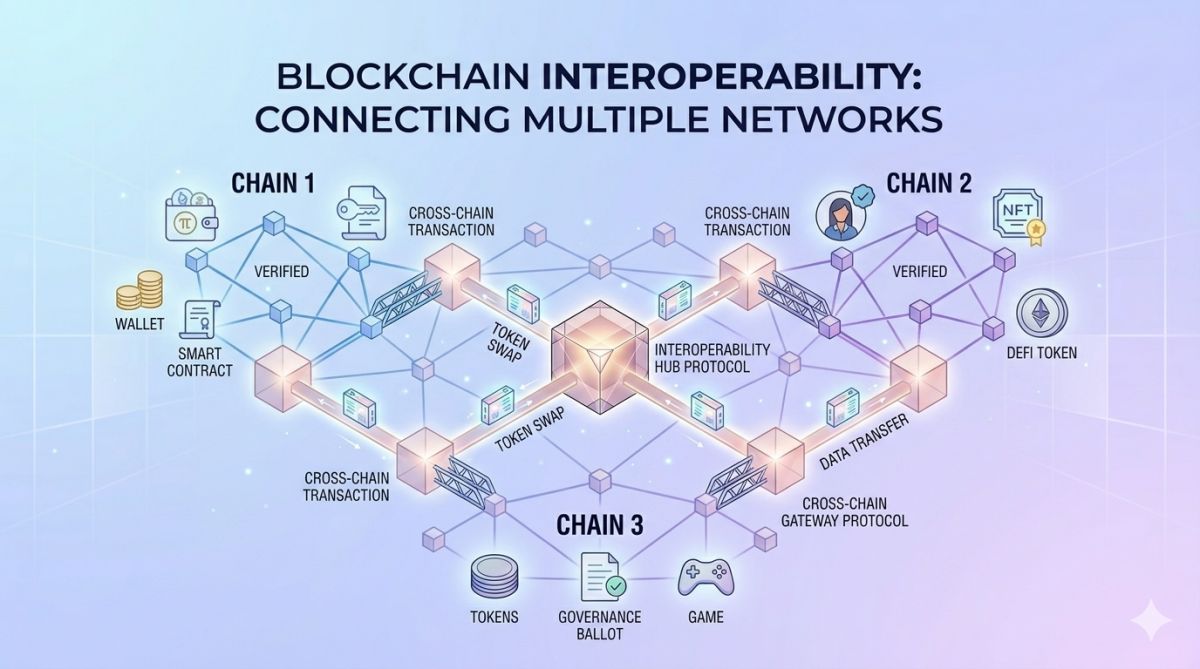
Imagine living in a world where you could only make phone calls to people who use the exact same mobile carrier as you. If you had AT&T, you couldn't text your friend on Verizon. Or imagine if a Gmail user was completely blocked from sending an email to a Yahoo user. That sounds like a terrible, fragmented experience, right? Yet, for the first decade of its existence, this is exactly how the cryptocurrency industry operated.
Blockchains are naturally blind to the outside world. Bitcoin knows absolutely nothing about what is happening on Ethereum, and Ethereum cannot see the Pi Network. At ZanaChain, we know that mass adoption of Web3 requires a seamless, unified experience. This is where the magic of Blockchain Interoperability comes in. In this comprehensive guide, we will explore how we are connecting isolated digital islands to build a true, global Web3 internet.
The Problem: The "Silo" Effect and Fragmented Liquidity
By design, Layer 1 blockchains (like Bitcoin, Solana, and Ethereum) are closed ecosystems. They prioritize their own internal security and consensus rules. While this makes them incredibly secure, it creates a massive problem: Isolation.
If a user holds all their wealth in Bitcoin, they cannot use that wealth to interact with a Decentralized Finance (DeFi) lending platform built on Ethereum. They would have to sell their Bitcoin, transfer fiat money to a centralized exchange, buy Ethereum, and then transfer it to a Web3 wallet. This friction destroys the user experience and fractures the total money (liquidity) available in the Web3 market into thousands of isolated "silos."
What Is Blockchain Interoperability? The Intranet vs. Internet Analogy
Interoperability is the ability of different, independent blockchain networks to communicate, share data, and transfer digital assets seamlessly without relying on a centralized corporate middleman.
In the 1980s, computers were connected via local "Intranets"—closed networks within a single building. It wasn't until the invention of standard communication protocols (TCP/IP) that these isolated computers connected to form the global "Internet." Blockchain interoperability is the Web3 equivalent of TCP/IP. It connects isolated blockchain "intranets" into a unified "Internet of Value."
How Do Blockchains Actually Communicate?
Since two different blockchains speak entirely different coding languages, developers have created ingenious solutions to translate and transfer value between them. Here are the three main technologies powering the multi-chain future:
1. Cross-Chain Bridges (The Lock and Mint Mechanism)
A "Bridge" is the most common way to move a token from Network A to Network B. But here is the secret: the actual token never moves.
If you want to move 10 Ethereum to the Polygon network, the bridge uses a smart contract to Lock your 10 Ethereum on the main network. Once locked, a second smart contract on Polygon automatically Mints (creates) 10 exact replica tokens (often called "Wrapped" tokens) and sends them to your Polygon wallet. When you want to go back, the replica tokens are burned (destroyed), and your original Ethereum is unlocked. It is a brilliant system of digital IOUs.
2. Cross-Chain Messaging Protocols
Instead of just moving money, modern interoperability protocols (like LayerZero or Chainlink CCIP) allow blockchains to send actual data and instructions to each other. A smart contract on Ethereum could trigger an action on the Binance Smart Chain. This allows developers to build "Omnichain" dApps that operate across multiple networks simultaneously from a single user interface.
3. Layer 0 Ecosystems
Some projects, like Cosmos and Polkadot, approach the problem differently. Instead of building bridges between existing networks, they built a "Layer 0" foundation. They allow developers to launch custom blockchains that natively speak the same language from day one, ensuring perfect, built-in interoperability within their specific ecosystem.
The Dark Side: Why Bridges Are a Hacker's Paradise
To truly understand interoperability, we must discuss its massive security flaws. Remember the "Lock and Mint" mechanism? If a bridge holds $500 Million of locked Ethereum to back the wrapped tokens on another network, that bridge becomes a massive honeypot for hackers.
If a hacker finds a bug in the bridge's smart contract and steals the locked Ethereum, the "wrapped" replica tokens on the other network immediately become worthless because they are no longer backed by real assets. This has resulted in some of the largest hacks in crypto history, such as the $600 Million Ronin Bridge exploit. This is why ZanaChain constantly advocates for rigorous smart contract auditing and cautious use of cross-chain infrastructure.
Frequently Asked Questions (FAQ)
1. Can I send Bitcoin directly to an Ethereum wallet address?
Absolutely not. If you try to send Bitcoin directly to an Ethereum address without using a specialized cross-chain bridge or a centralized exchange, your funds will be permanently lost in the digital void. They are incompatible networks.
2. What is a "Wrapped" Token (like wBTC)?
Wrapped Bitcoin (wBTC) is simply an Ethereum-compatible token that represents 1 Bitcoin. It allows Bitcoin holders to use their wealth inside Ethereum's DeFi ecosystem while maintaining the exact price value of normal Bitcoin.
Conclusion: The Multi-Chain Future
The future of Web3 is not a "winner-takes-all" battle where one blockchain destroys the rest. The future is multi-chain. Different networks will specialize in different things—some will focus on maximum security, some on lightning-fast gaming, and some on mobile-friendly consensus like the Pi Network. Interoperability is the vital infrastructure that ties them all together. As ZanaChain continues to build, creating dApps that can seamlessly interact across these diverse ecosystems remains a core pillar of our developmental vision.