Digital Identity in Web3
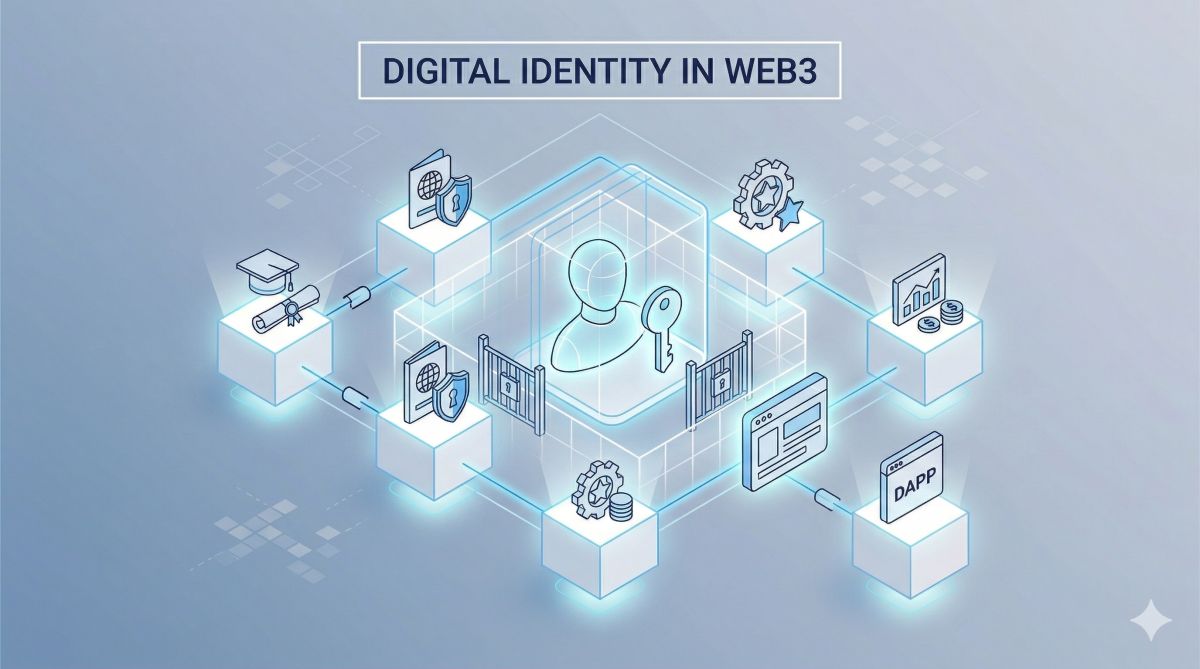
The era of "Digital Serfdom," where tech giants own and sell your personal data, is coming to an end. We are entering the age of Self-Sovereign Identity (SSI), a Web3 revolution where you—and only you—own your digital self. In this new decentralized frontier, your identity is not a collection of accounts on corporate servers, but a secure cryptographic signature held in your private wallet. At ZanaChain, we are leveraging the massive, KYC-verified foundation of the Pi Network to explore how decentralized identity can eliminate passwords, prevent data breaches, and return privacy to the individual. Welcome to a world where your ID is your own, and your data stays where it belongs: with you.
What is Digital Identity in Web3? (From Accounts to Wallets)
In the Web2 world (the current internet), your identity is fragmented. You have a Google ID, a Facebook ID, and a work ID. These companies act as "Identity Providers." They hold your data, they track your movements, and they can delete your "self" at any moment. You are essentially renting your digital existence.
Web3 Identity replaces this with a single, universal layer. Your Blockchain Wallet becomes your passport. Instead of "Logging in with Google," you "Connect your Wallet." You prove who you are through Cryptography, not through a centralized database. This shift moves the power from the corporation to the citizen.
The 3 Pillars of Decentralized Identity
As we navigate through 2026, three core technologies are making Web3 identity a reality:
1. DIDs (Decentralized Identifiers)
A DID is a new type of identifier that is globally unique, resolvable with high availability, and verifiable. Unlike a username, a DID is not owned by any company. It is a permanent address on the blockchain that points to your identity documents or credentials without revealing their contents.
2. VCs (Verifiable Credentials)
Imagine your driver’s license, university degree, or KYC status as a digital "stamp" in your wallet. These are Verifiable Credentials. When a dApp needs to know if you are over 18, you don't show them your whole ID; you provide a cryptographic proof that you meet the requirement. They get the "Yes," but they never see your birthdate or address.
3. ZKPs (Zero-Knowledge Proofs)
This is the "Holy Grail" of privacy. A Zero-Knowledge Proof allows you to prove that a statement is true without revealing any information beyond the validity of the statement itself. In the ZanaChain ecosystem, ZKPs ensure that your transactions are secure and verified without exposing your personal habits to the public ledger.
The Pi Network Advantage: Human-Centric Identity
One of the biggest challenges in Web3 is "Sybil Attacks"—one person creating thousands of bot accounts. Pi Network has solved this on a historic scale.
- The World's Largest KYC: By March 2026, Pi has verified tens of millions of real humans. This makes the Pi ecosystem the most trusted "Human Network" in Web3.
- Reputation Systems: Because we know every Pioneer is a real person, dApps built by ZanaChain can implement fair voting, honest marketplaces, and social systems that are impossible on bot-filled platforms like X (Twitter) or Reddit.
Why Digital Identity Matters for Your Future
The benefits of owning your identity extend far beyond just "logging in":
- End of Data Breaches: Hackers attack centralized databases (like those of major retailers or banks) to steal millions of IDs at once. In Web3, there is no central database to hack. Your data is encrypted and held by you.
- Portability: Your reputation, your achievements, and your assets move with you across the entire internet. If you leave one social media dApp, you don't lose your "friends" or "followers"—they are linked to your DID, not the app.
- Global Financial Access: A verified Web3 ID allows someone in a developing nation to access global DeFi loans or freelance work with the same level of trust as someone in a major financial hub.
Frequently Asked Questions (FAQ)
1. Is my physical ID stored on the blockchain?
No. Storing sensitive data like a passport on a public blockchain would be a massive security risk. Instead, a "hash" (a digital fingerprint) of the verification is stored. The actual data remains on your device or in secure, encrypted storage that only you can unlock.
2. What happens if I lose my wallet? Do I lose my identity?
In the decentralized world, your 24-word passphrase is your identity's recovery key. If you lose it, you lose access to that identity. However, new "Social Recovery" models are being developed in 2026 that allow trusted friends to help you recover your ID without a central authority.
3. How does ZanaChain use my identity?
ZanaChain dApps follow a "Privacy-First" rule. We only request the minimum information necessary to provide our services. We use Pi’s KYC-verified status to ensure our community is safe from bots, but we never store or sell your personal data.
Conclusion: Claiming Your Digital Sovereignty
The evolution of digital identity is the most human-centric part of the Web3 revolution. It is about dignity, privacy, and the right to own one’s self in a digital world. As we build out the ZanaChain ecosystem on the Pi Network, we aren't just building apps; we are building a foundation of trust. The days of being a "product" for tech giants are over. In the 2026 Web3 era, you are the owner, the operator, and the authority of your own identity. Welcome to the future of the individual.