Pi DEX: Understanding the Future of Decentralized Trading in the Pi Network Ecosystem
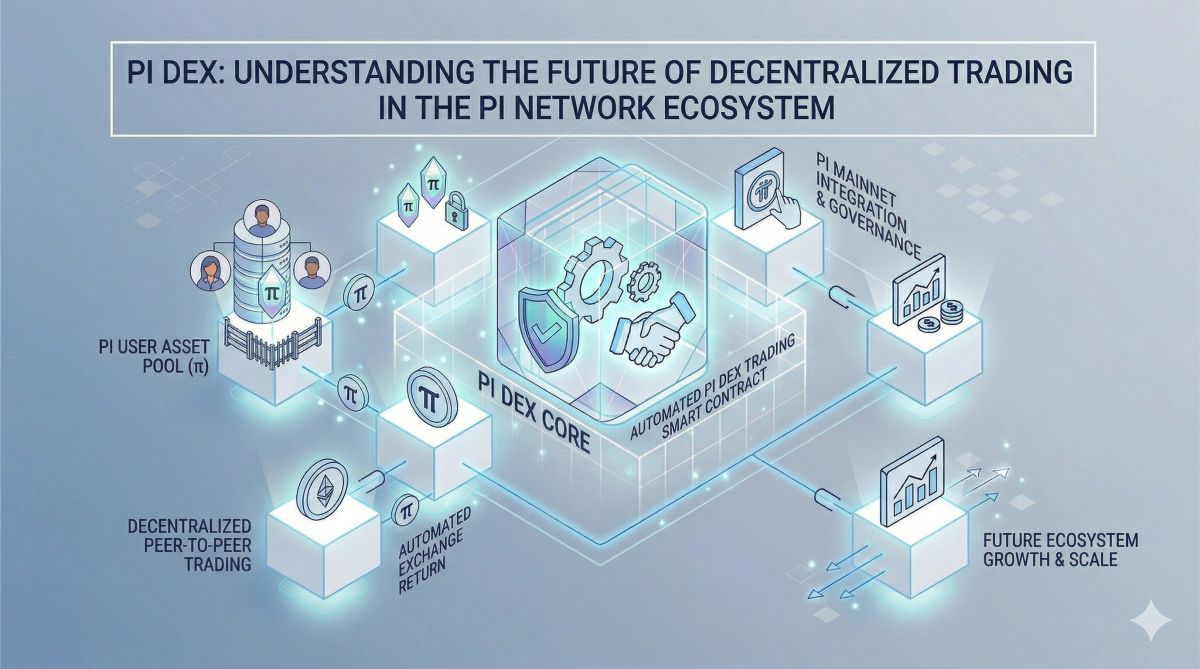
The evolution of the Pi Network has reached a critical turning point with the emergence of decentralized trading. A Pi DEX is not just a platform; it is the financial engine that transforms PI from a mobile-mined asset into a globally liquid currency. By eliminating centralized middlemen, a Pi DEX allows Pioneers to swap tokens directly from their wallets using secure smart contracts. At ZanaChain, we are analyzing how this decentralized infrastructure—powered by Protocol 20—is paving the way for a trillion-dollar Web3 economy built on transparency, security, and community-led liquidity.
What is a Pi DEX? (The Bankless Revolution)
In the traditional world, if you want to trade currency, you go to a bank or a centralized exchange. You hand over your money, and they perform the trade for you—taking a fee and keeping a record in their private database. A Pi DEX (Decentralized Exchange) deletes the middleman. It is a peer-to-peer marketplace that lives entirely on the Pi Blockchain.
Unlike centralized exchanges (CEX) like Binance or Coinbase, a DEX has no "gatekeeper." There is no CEO to freeze your account and no central server to be hacked. You trade directly from your Pi Wallet using your own private keys. As the saying goes in Web3: "Not your keys, not your coins." On a Pi DEX, you are the only one in control of your wealth.
The Engine Under the Hood: Protocol 20 and AMMs
How can you trade if there is no "company" matching buyers and sellers? The magic lies in two revolutionary technologies that became fully functional following the March 2026 Protocol 20 upgrade:
1. Automated Market Makers (AMM)
Most Pi DEXs use an AMM model. Instead of waiting for another person to buy your Pi, you trade against a Liquidity Pool—a digital vault filled with pairs of tokens (e.g., PI and USDT). A mathematical formula (usually x * y = k) instantly calculates the price based on the ratio of tokens in the pool. This ensures that you can execute a trade 24/7, even if every other user is asleep.
2. Liquidity Providing (Yield Farming)
Where does the money in the pools come from? It comes from the community! Regular Pioneers can become Liquidity Providers (LPs) by depositing their tokens into these pools. In return, the DEX gives them a portion of the trading fees (usually 0.3%) from every transaction. This allows Pi holders to earn passive income while helping the ecosystem grow.
Why a DEX is the "Missing Link" for Pi Utility
At ZanaChain, we believe a robust DEX is the foundation of the entire ecosystem for three main reasons:
- Price Discovery: Without a DEX, the value of Pi is purely speculative. A DEX provides a real-time, transparent market price based on actual supply and demand.
- Support for PiRC1 Tokens: As ZanaChain and other developers launch new dApps, they will create their own utility tokens (PiRC1). A DEX allows these tokens to be instantly tradable against Pi, creating a unified economy.
- Financial Inclusion: Millions of people in the Pi community do not have access to traditional banks or centralized exchanges due to geographic or economic barriers. A Pi DEX is open to anyone with a smartphone and a Pi Wallet—no permission required.
The Security Challenge: Staying Safe in a Decentralized World
Absolute freedom comes with absolute responsibility. Because there is no "Customer Support" on a DEX, users must be aware of the following:
- Smart Contract Risks: If the code of a DEX has a bug, hackers can drain the liquidity pools. At ZanaChain, we only recommend using DEX protocols that have undergone rigorous third-party security audits.
- Impermanent Loss: If the price of Pi changes drastically while your tokens are in a liquidity pool, you might end up with less value than if you had simply held them in your wallet.
- Slippage: In pools with low liquidity, a large trade can "move the price" significantly, causing you to receive fewer tokens than expected.
Frequently Asked Questions (FAQ)
1. Can I use a Pi DEX through the Pi Browser?
Yes. Legitimate Pi DEXs are accessible directly through the Pi Browser. This ensures that the dApp can securely interact with your Pi Wallet without you ever having to expose your 24-word passphrase.
2. Are there trading fees on a Pi DEX?
Yes. You will pay a tiny amount of PI as a "Gas Fee" to the network validators, and a small percentage (the swap fee) that goes directly to the Liquidity Providers who make the trade possible.
3. What is Pi DEX briefly?
Pi DEX is a decentralized exchange created for trading Pi with other digital assets or stablecoins.
Conclusion: The Heartbeat of the Pi Economy
The launch of decentralized exchange infrastructure marks the transition of the Pi Network from a social community into a global financial powerhouse. With the smart contract capabilities of Protocol 20, the possibilities are infinite. At ZanaChain, we are committed to developing and supporting the tools that make decentralized trading safe, fast, and accessible for every Pioneer. The "Bank in your Pocket" is no longer a dream—it is a reality powered by the Pi DEX.