Pi Network Ecosystem and dApps: Building Utility Beyond Mining
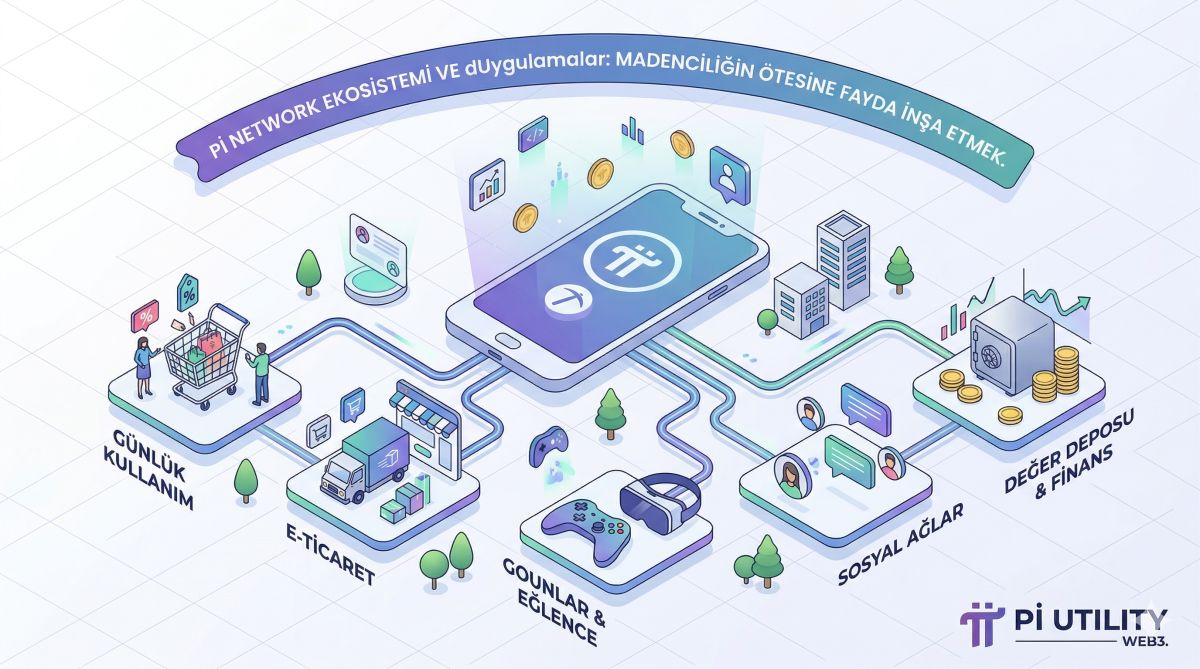
For years, the skeptical voices in the crypto world asked the same question: "What can you actually DO with Pi?" They saw millions of people tapping a button on their phones but saw no marketplace, no services, and no real-world utility. Those skeptics were looking at the seeds, but they failed to see the forest that was being planted.
Today, in March 2026, the answer is everywhere. With the Pi Network Ecosystem fully live on the Open Mainnet and powered by the advanced Protocol 20 smart contracts, Pi has transitioned from a mining experiment into a thriving digital nation. At ZanaChain, we aren't just observers of this evolution—we are the architects. In this guide, we will explore the explosive growth of Pi-based dApps, the technology that powers them, and why utility is the only thing that matters for the future of Web3.
What Exactly is a Pi dApp? (The App Store of the Blockchain)
A Decentralized Application (dApp) is software that looks and feels like a normal mobile app or website, but with one massive difference: its backend logic runs on a decentralized blockchain rather than a centralized corporate server.
The Smartphone Analogy: Imagine the Pi Network is like the iOS or Android operating system. The Pi Browser is the App Store. The dApps are the actual tools—Uber, Amazon, or Instagram—that you use every day. However, in the Pi ecosystem, these apps don't sell your data to advertisers. Instead, they use PI as a native currency to facilitate instant, global, peer-to-peer commerce without any bank or middleman taking a cut.
The 4 Pillars of the Pi Ecosystem
What makes the Pi ecosystem stronger than almost any other blockchain? It’s not just the code; it’s the human foundation.
1. The Massive KYC-Verified User Base
Most blockchains are ghost towns filled with bots and speculators. Pi Network has tens of millions of real, identity-verified (KYC) humans. For developers like ZanaChain, this is a goldmine. We don't have to wonder if people will use our apps; the users are already there, verified, and ready to participate in a real economy.
2. Pi Browser and SDK Integration
The Pi SDK (Software Development Kit) allows developers to easily integrate Pi payments into their apps. With a few lines of code, an app can request a payment, and the user can approve it using their Pi Wallet fingerprint or FaceID. This "frictionless" experience is what will drive mass adoption.
3. Protocol 20: The Smart Contract Revolution
The 2026 Protocol 20 upgrade was the turning point. It introduced the ability to create complex "If/Then" logic on the blockchain. For example: "If the freelancer delivers the project, then the smart contract automatically releases the PI payment." This eliminates the need for expensive escrow services and lawyers.
4. PiRC1 Token Standard
Just as Ethereum has ERC-20 tokens, Pi now has PiRC1. This allows ZanaChain and other developers to create specific utility tokens for their own dApps that are fully compatible with the Pi Mainnet, creating a "network of networks."
ZanaChain's Role: Building the Future of Utility
At ZanaChain, our mission is to move beyond the "mining phase" and into the "using phase." We are focusing on three major utility sectors within the Pi ecosystem:
- Decentralized Commerce: Creating marketplaces where Pioneers can trade physical goods and professional services globally using PI.
- Web3 Education: Building platforms that reward users for learning about blockchain security and decentralized finance (Learn-to-Earn).
- Social Utility: Developing social platforms where content creators own their data and are tipped directly in PI by their audience, bypassing the "Big Tech" tax.
Why "Utility-First" is the Only Way to Win
History is littered with failed crypto projects that focused only on "Number Go Up" (speculation). When the hype dies, the project dies. Pi Network has taken the opposite approach. By focusing on Transactional Demand—the need to buy a cup of coffee, pay for a subscription, or hire a graphic designer—Pi creates a floor for its economic value that isn't dependent on market charts, but on real human activity.
Frequently Asked Questions (FAQ)
1. Where can I find Pi dApps?
All official and community-developed dApps are located within the Pi Browser. Look for the "Explore the Ecosystem" or "Mine.pi" dashboard to see the latest verified projects.
2. Are my Pi coins safe when I use a dApp?
As long as you stay within the official Pi Browser and use reputable developers like ZanaChain, your wallet is secure. Never enter your 24-word passphrase into a dApp. Legitimate dApps will only ask you to sign a transaction through the official Pi Wallet (https://wallet.pinet.com) interface.
3. Can I build my own dApp on Pi?
Yes! The Pi Developer portal is open to everyone. If you have an idea for a tool that solves a real-world problem, you can use the Pi Sandbox to test your application before deploying it to the Mainnet.
Conclusion: The Era of the Empowered Pioneer
The transition from mining to utility is the most important chapter in the Pi Network story. We are moving away from "earning for the sake of earning" and toward "using for the sake of living." The Pi ecosystem is no longer a dream; it is a functional, decentralized world that is open for business. At ZanaChain, we are proud to be laying the bricks for this new digital civilization. The question is no longer "What can you do with Pi?"—the question is, "What CAN'T you do?"