Pi Network Mainnet: Why It Matters for the Future of Pi
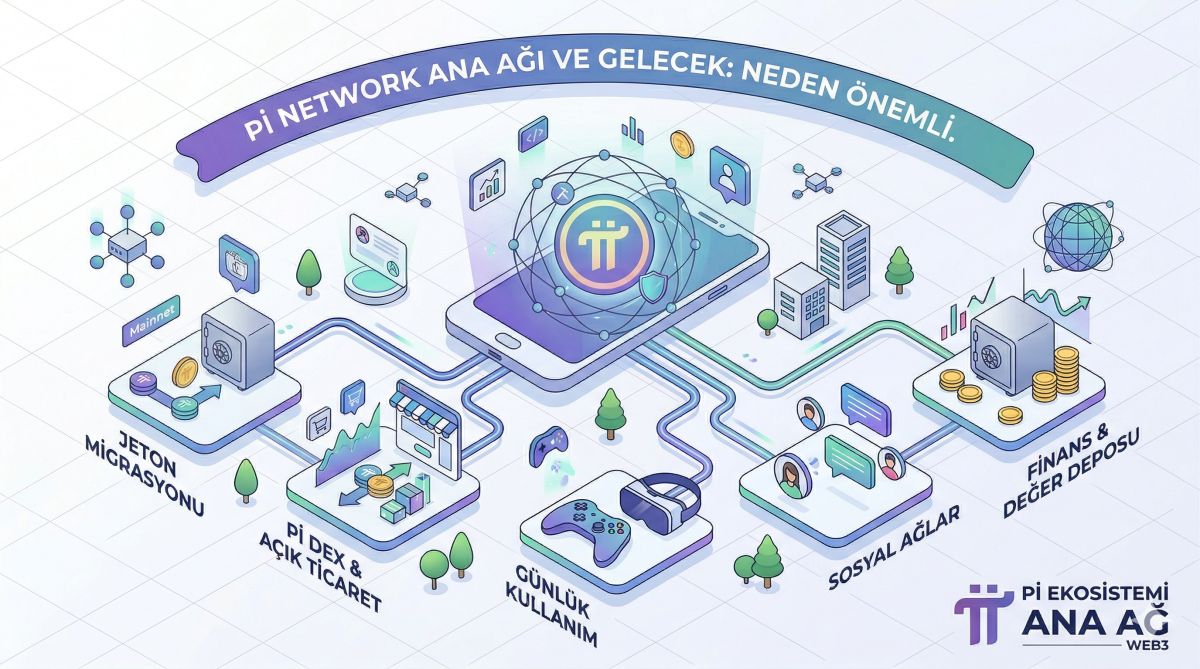
In the world of blockchain, a "Mainnet" launch is the equivalent of a rocket launch at NASA. It is the moment when years of coding, testing, and community building leave the safety of the laboratory and enter the harsh, real-world vacuum of the global economy. For Pi Network, the journey to Mainnet was unlike any other project in history.
At ZanaChain, we have closely monitored this evolution because the Pi Network Mainnet represents more than just a live blockchain; it represents the birth of a sovereign digital economy powered by tens of millions of verified humans. In this comprehensive guide, we will break down the crucial transition from Testnet to the now-live Open Mainnet, the significance of the 2026 Protocol 20 upgrade, and why this infrastructure is the perfect playground for next-generation decentralized applications (dApps).
What Exactly is a Mainnet? (The Training Wheels Analogy)
In technical terms, a Mainnet is the final, functional version of a blockchain network. It is the independent ledger where transactions have real value and are permanently recorded by a decentralized group of nodes.
The Bicycle Analogy:
- Testnet is like a child’s bicycle with training wheels, being ridden in a padded room. If you crash (the code fails), nobody gets hurt, and the "money" isn't real.
- Mainnet is the professional racing bike on a mountain road. There are no training wheels. The speed is high, the risks are real, and the value is tangible.
The Strategic Phases: Why Pi Didn't Rush the Launch
Unlike many "hype-driven" tokens that launch a Mainnet in weeks only to see it crash, Pi Network utilized a unique, multi-stage strategy to ensure long-term stability and regulatory compliance.
1. The Enclosed Mainnet Era (The Incubation)
From late 2021 through early 2025, Pi operated in an "Enclosed" state. The blockchain was live, but a digital firewall prevented external connectivity to other blockchains or exchanges. This was a stroke of genius for two reasons:
- KYC at Scale: It allowed millions of users to complete identity verification without the chaotic interference of external speculators.
- Utility First: It forced the community to build real apps (like Pi Browser utilities) that used the coin for actual goods and services within the ecosystem, rather than just trading it for profit.
2. The Open Mainnet (The Global Connection)
In February 2025, the firewall was removed. This marked the official Open Mainnet launch. For the first time, Pi was connected to the broader world of crypto exchanges, bridges, and external wallets. This transition turned Pi from a "community project" into a global financial asset.
The March 2026 Revolution: Protocol 20 and Smart Contracts
While the Open Mainnet launch was the "Big Bang," the Protocol 20 upgrade in March 2026 was the industrial revolution. This upgrade integrated advanced smart contract functionality into the Pi blockchain, similar to the capabilities of Ethereum or Solana but with Pi’s massive, mobile-verified user base.
For developers like us at ZanaChain, Protocol 20 is the ultimate green light. It allows for:
- DeFi Protocols: Lending, borrowing, and swapping PI tokens directly on the chain.
- PiRC1 Tokens: The ability for new projects to launch their own tokens within the Pi ecosystem.
- Real-World Marketplaces: Secure, escrow-based apps where you can buy a laptop or hire a freelancer using PI coins.
Why Mainnet Matters for Your PI Coins
Without a Mainnet, your balance in the Pi app is essentially just a "promise" or a scoreboard. Mainnet migration is the process that turns that scoreboard into a Real Asset.
- Migration to Wallet: Only after passing KYC and completing the Mainnet Checklist can your mined Pi be transferred to your non-custodial Pi Wallet.
- On-Chain Sovereignty: Once your coins are on the Mainnet, you—and only you—control them. Not even the Pi Core Team can stop a transaction once it is broadcast to the decentralized nodes.
Frequently Asked Questions (FAQ)
1. Is my Pi balance automatically on the Mainnet?
No. You must complete the "Mainnet Checklist" in your Pi app. This includes creating a wallet, signing the acknowledgment, and most importantly, passing your KYC verification. Once these steps are done, your balance is queued for migration.
2. Can I use Pi to buy things now that it's on Open Mainnet?
Yes. Since the Open Mainnet launch in 2025, users can send PI to any other wallet address globally. Numerous marketplaces and dApps (including those being developed by ZanaChain) allow you to use PI for various digital and physical utilities.
3. What happens if I lose my 24-word passphrase on Mainnet?
There is no recovery. On the Mainnet, you are your own bank. If you lose your passphrase, your coins are lost forever in the blockchain. ZanaChain strongly recommends writing your passphrase on physical paper and storing it in a safe place—never store it as a screenshot on your phone.
Conclusion: The Architecture of a New Economy
The Pi Network Mainnet is the foundation upon which a new, inclusive financial world is being built. By taking the slow, "utility-first" path through the Enclosed phase and into the now-thriving Open Mainnet, Pi has avoided the pitfalls of speculation that have ruined many other projects. At ZanaChain, we are incredibly excited to build within this live, Protocol 20-powered ecosystem. The era of "testing" is over; the era of "building and using" is here.