The Future of Tokenized Assets
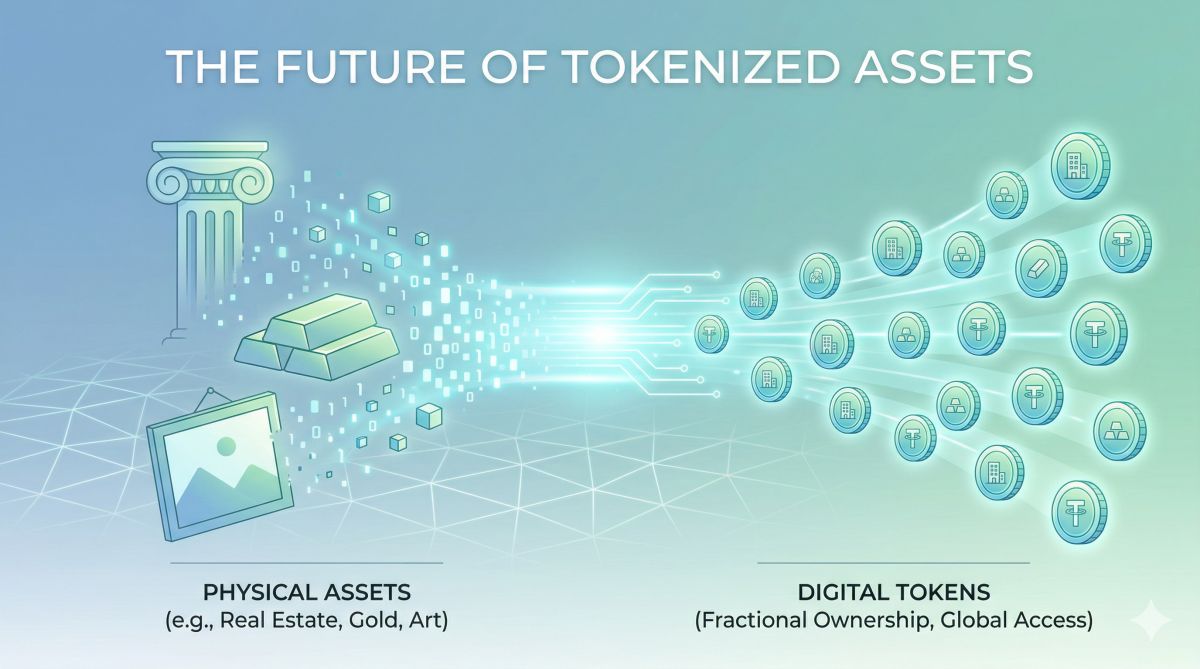
The walls between traditional finance and the digital frontier are finally crumbling. Tokenization is the revolutionary process of converting high-value physical assets—like prime real estate, fine art, and gold—into blockchain-based tokens. In the 2026 Web3 economy, you no longer need millions of dollars to invest in a skyscraper; you can own a fraction of it with just a few clicks. At ZanaChain, we are leveraging the secure, KYC-verified infrastructure of the Pi Network to explore how Protocol 20 smart contracts are bringing trillions of dollars in "offline" value onto the chain. Welcome to the era of total liquidity, where ownership is transparent, fractional, and accessible to every Pioneer on the planet.
What is Tokenization? (Turning Atoms into Bits)
Tokenization is the "Digital Twin" technology of the financial world. It takes a physical asset—an apartment in Dubai, a bar of Swiss gold, or a 1960s Ferrari—and creates a digital representation of it on the blockchain. Each token acts as a legal deed of ownership.
In the Web2 era, selling a piece of real estate could take months of paperwork, notary meetings, and bank approvals. In the Web3 era of 2026, these rights are transferred in seconds via smart contracts. The asset stays in the physical world, but its value moves at the speed of the internet.
The Four Pillars of the Tokenization Revolution
As we move through 2026, four key advantages are driving the mass adoption of tokenized assets:
1. Fractional Ownership (Democratizing Wealth)
Historically, the best investment opportunities were reserved for "Accredited Investors" with deep pockets. Tokenization breaks these assets into millions of tiny pieces. Now, a student in Vietnam or a farmer in Nigeria can own $50 worth of a commercial building in New York, earning their share of the rent automatically through their Pi Wallet.
2. 24/7 Global Liquidity
Traditional markets close at 5 PM on Fridays. Blockchain never sleeps. Tokenized assets can be traded on Decentralized Exchanges (DEXs) at 3 AM on a Sunday. This constant liquidity ensures that investors can exit their positions whenever they need cash, without waiting weeks for a buyer.
3. Automated Compliance and Dividends
With Protocol 20, smart contracts handle the "boring" parts of finance. If a tokenized building earns rent, the contract automatically calculates each holder’s share and sends the payment directly to their wallet. No accountants, no delays, and no errors.
4. Immutable Transparency
In the past, real estate scams often involved selling the same property to multiple people. On the blockchain, the ledger is public and immutable. Anyone can verify who owns which fraction of the asset, creating a level of trust that was previously impossible.
ZanaChain’s Vision: The Pi Network RWA Hub
At ZanaChain, we believe the Pi Network is the perfect home for tokenized assets. Why?
- Verified Identity: High-value asset trading requires knowing who is on the other side. Pi’s 15+ million KYC-verified users provide the most secure environment for compliant RWA trading.
- Scalable Infrastructure: Low fees on the Pi Mainnet make it economically viable to trade even small fractions of assets, something that is too expensive on the Ethereum network.
Frequently Asked Questions (FAQ)
1. If I buy a token, do I really own the physical asset?
Yes, provided the project is compliant. Legitimate tokenization platforms use a "Special Purpose Vehicle" (SPV)—a legal company that owns the physical asset and is legally bound to the token holders. Always check the legal prospectus of a project.
2. Can tokenized assets be used as collateral?
This is the most exciting part of 2026 DeFi! You can now use your tokenized gold or real estate as collateral to take out a loan in stablecoins, allowing you to access cash without selling your long-term investments.
3. What happens if the physical asset is damaged?
Just like traditional assets, physical items must be insured. In a professional tokenization model, insurance policies are part of the smart contract's metadata, ensuring that token holders are protected even if the physical asset faces issues.
Conclusion: The Great Wealth Reset
The future of tokenized assets is not just about technology; it is about inclusion. We are moving toward a global market where every human has the same access to high-yield investments, regardless of their location or bank balance. At ZanaChain, we are proud to be building the dApps and bridges that connect the physical and digital worlds. The era of the "Closed Club" is over. The era of tokenized ownership has arrived. Are you ready to own a piece of the world?