What Are Decentralized Exchanges (DEX) and How Do They Work
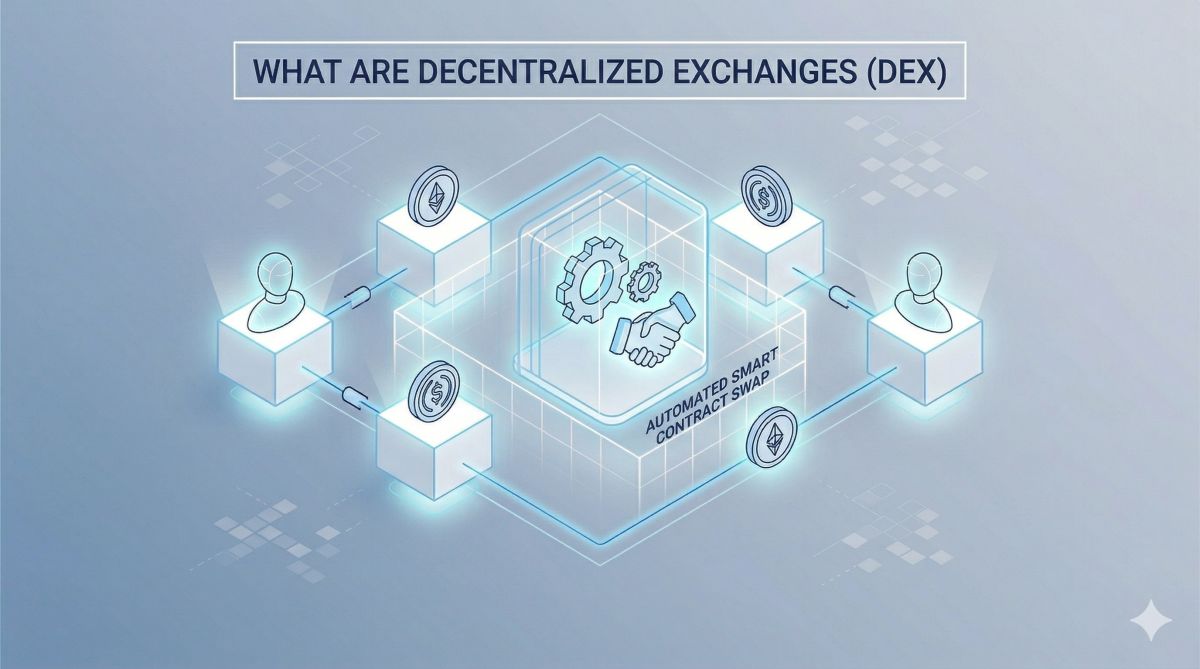
The financial world is witnessing a historic shift from centralized gatekeepers to user-owned protocols. A Decentralized Exchange (DEX) is the beating heart of this movement, allowing you to trade digital assets directly from your wallet without ever handing over your private keys to a third party. As of March 2026, with the official activation of the Pi DEX and the power of Protocol 20, the Pi Network has moved beyond simple mining into a fully functional Web3 economy. At ZanaChain, we explore how these "Bankless" platforms work, why they are safer than traditional exchanges, and how they are providing millions of Pioneers with the tools for true financial sovereignty.
What is a DEX? (Your Wallet is the Exchange)
In a traditional centralized exchange (CEX) like Binance or Kraken, you don't actually own your coins while they are on the platform—the exchange owns the keys, and you own a "promise" of payment. If the exchange goes down, your funds are at risk.
A DEX (Decentralized Exchange) flips this model. It is a set of open-source Smart Contracts that live on the blockchain. When you want to swap Pi for a stablecoin or another token, the trade happens peer-to-peer. The assets move directly from your wallet to the blockchain and back to your wallet. You are the only person who ever touches your money.
How DEXs Work: The Magic of AMMs and Liquidity Pools
Since there is no "company" matching buyers and sellers, how does a DEX know the price? Most modern DEXs (including the new Pi DEX) use a model called Automated Market Makers (AMM).
1. Liquidity Pools: The Fuel of Trading
Instead of an order book, a DEX uses "Liquidity Pools"—digital vaults containing pairs of tokens (e.g., PI and USDT). Anyone can become a Liquidity Provider (LP) by depositing their tokens into these pools. In return, they earn a small fee from every trade that happens in that pool.
2. The Constant Product Formula
DEXs use a mathematical formula (usually x * y = k) to determine prices. If many people buy Pi from a pool, the supply of Pi goes down and the price automatically goes up to keep the pool balanced. This ensures that a trade can always be executed, 24 hours a day, without needing a human broker.
The 2026 Milestone: Pi DEX and Protocol 20
The recent launch of the native Pi DEX in March 2026 marks the beginning of "True Utility." Built on the Stellar Consensus Protocol (SCP) foundations but expanded with the smart contract capabilities of Protocol 20, the Pi DEX offers:
- Instant Settlement: Trades are finalized in 3-5 seconds, significantly faster than Ethereum-based DEXs.
- Micro-Fees: Transaction costs remain near-zero, making small trades viable for everyone.
- Verified Participants: Because the Pi ecosystem is KYC-verified, the DEX is more resistant to "wash trading" and market manipulation by bots.
DEX vs. CEX: Why Decentralization Wins
| Feature | Centralized (CEX) | Decentralized (DEX) |
|---|---|---|
| Control | Exchange holds your keys | You hold your keys |
| Privacy | Requires full ID (KYC) | Wallet-based (Privacy focused) |
| Safety | Single point of failure | Distributed across nodes |
ZanaChain’s Role in the Trading Ecosystem
At ZanaChain, we are committed to making decentralized trading accessible. We are developing dApps that integrate with the Pi DEX to provide advanced analytics, price alerts, and simplified "One-Click Swaps" for Pioneers. Our mission is to remove the technical complexity of Web3 so that you can focus on managing your digital wealth securely.
Frequently Asked Questions (FAQ)
1. Is the Pi DEX safe to use?
The underlying smart contracts of the Pi DEX have undergone external audits (such as Hacken or CertiK). However, always ensure you are accessing the DEX through the official Pi Browser to avoid phishing clones.
2. What is "Slippage"?
Slippage is the difference between the price you expect and the price at which the trade is executed. This usually happens in pools with low liquidity. The Pi DEX allows you to set a "Slippage Tolerance" (e.g., 0.5%) to protect your trades.
3. Can I trade Pi for Bitcoin on a Pi DEX?
Through Cross-Chain Bridges being developed in 2026, Pioneers can swap native PI for wrapped versions of other major assets like BTC or ETH directly within the DEX environment.
Conclusion: The Future of Global Liquidity
Decentralized exchanges are more than just trading platforms; they are the infrastructure of a fairer world. By returning the power of liquidity to the people, we are ending the era of centralized financial dominance. As the Pi Network ecosystem matures with the launch of its native DEX, the vision of a truly inclusive digital economy is finally becoming a reality. At ZanaChain, we are proud to provide the bridge to this new era of "Trade-it-Yourself" finance. Welcome to the future of trading.