What Is a DEX (Decentralized Exchange)?
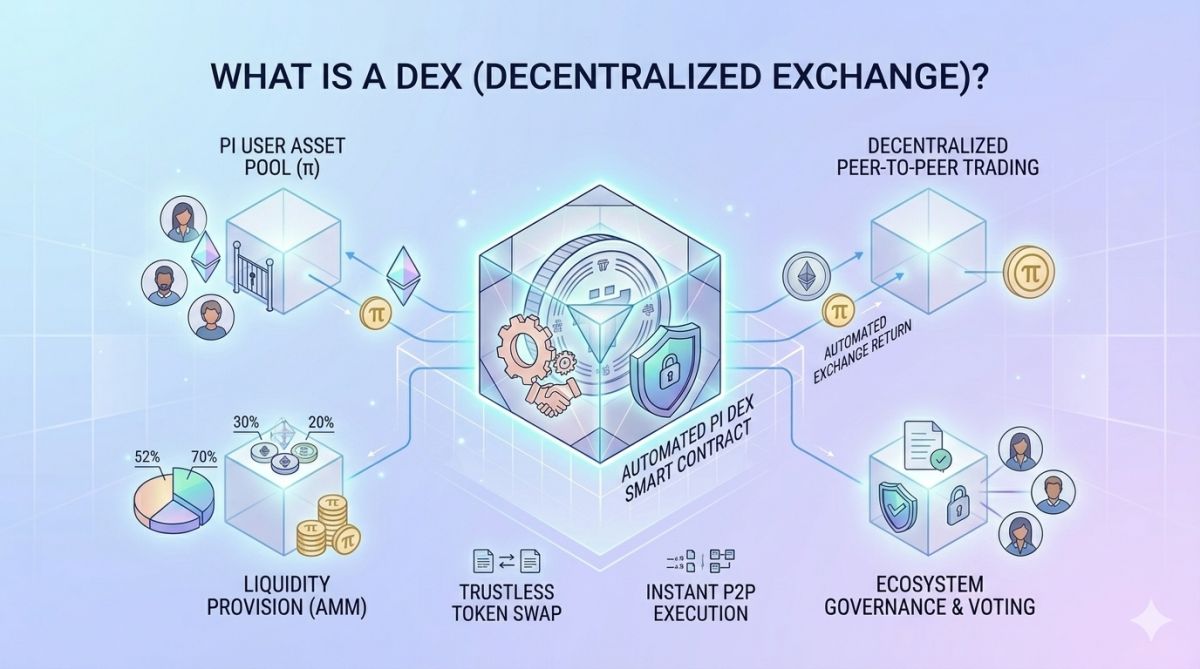
In the short history of cryptocurrency, we have witnessed multi-billion dollar catastrophes where massive centralized platforms collapsed overnight. When a traditional exchange freezes withdrawals, millions of users suddenly realize a terrifying truth: if you don't hold the private keys to your wallet, you don't actually own your crypto. The solution to this systemic vulnerability is the Decentralized Exchange (DEX).
At ZanaChain, we view DEX platforms as the beating heart of the decentralized finance (DeFi) ecosystem. They represent absolute financial sovereignty. In this comprehensive guide, we will break down what a DEX is, the fascinating mathematics that allow them to function without human middlemen, and why they are actively replacing the old guard of digital asset trading.
What Is a Decentralized Exchange (DEX)?
A Decentralized Exchange (DEX) is a peer-to-peer marketplace where users can trade, buy, and sell cryptocurrencies directly with one another. Unlike traditional, centralized exchanges (CEXs) such as Binance or Coinbase, a DEX has no CEO, no corporate headquarters, and no central server holding your funds.
The Supermarket vs. The Farmers' Market Analogy:
Think of a centralized exchange as a massive corporate supermarket. The supermarket buys all the apples, sets the price, puts them on the shelves, and hires cashiers to process your payment. You are forced to trust the supermarket's management.
A decentralized exchange is like a bustling, open-air farmers' market. There is no central boss. A smart contract (the code) simply provides the tables and the rules. Buyers and sellers meet directly at these digital tables to trade their apples for oranges. The code mathematically executes the trade, takes a tiny fee for the network, and ensures nobody gets cheated.
How Do DEX Platforms Actually Work? The End of Order Books
In traditional finance, stock markets use an "Order Book." If you want to sell 1 Bitcoin for $50,000, you have to wait for a buyer willing to pay exactly $50,000. But what if there is no buyer online at 3:00 AM? The market freezes.
Modern DEXs (like Uniswap, PancakeSwap, or those developing within the Pi Network ecosystem) solved this problem brilliantly by inventing the Automated Market Maker (AMM) and Liquidity Pools.
1. Liquidity Pools: The Digital Vaults
Instead of matching buyers and sellers directly, a DEX relies on massive digital vaults called Liquidity Pools. These pools hold pairs of tokens (for example, a pool holding equal values of Ethereum and USDT). Everyday users, known as Liquidity Providers (LPs), deposit their own crypto into these pools.
2. The AMM Algorithm: The Robot Cashier
When you want to trade your USDT for Ethereum, you don't trade with another person. You trade directly against the Liquidity Pool. An underlying mathematical formula—the Automated Market Maker (AMM)—instantly calculates the price based on how many tokens are left in the pool. You deposit your USDT into the pool and instantly withdraw the equivalent Ethereum. The trade happens in seconds.
3. Earning Passive Income
Why would a regular user put their crypto into a Liquidity Pool? Because every time someone makes a trade against that pool, the DEX charges a small fee (usually 0.3%). This fee is distributed directly to the Liquidity Providers as a reward. This is how users earn passive yield in DeFi.
The Undeniable Advantages of Trading on a DEX
The shift from centralized to decentralized trading is accelerating rapidly due to several massive benefits:
- Absolute Self-Custody: You trade directly from your Web3 wallet (like MetaMask). The DEX never holds your money. If the DEX website goes offline, your funds are still perfectly safe in your wallet.
- Permissionless & Global Access: There are no KYC (Know Your Customer) identity checks. You don't need to upload your passport or wait days for account approval. If you have an internet connection and a wallet, you can trade from anywhere in the world.
- Infinite Token Listings: Centralized exchanges only list popular, highly regulated coins. On a DEX, anyone can create a liquidity pool for a brand-new token instantly. This gives users access to emerging Web3 projects long before the corporate platforms notice them.
The Hidden Risks: What You Need to Know
To navigate the Web3 space safely, you must understand the risks of cutting out the middleman:
- No Customer Support: If you accidentally send your funds to the wrong address, or if you fall for a scam, there is no "Forgot Password" button or support hotline to call. Blockchain transactions are irreversible.
- Impermanent Loss: If you choose to become a Liquidity Provider, extreme price volatility in the tokens you deposited can result in mathematical losses compared to simply holding the tokens in your wallet.
- Rug Pulls & Scam Tokens: Because anyone can list a token on a DEX, scammers frequently create fake tokens with names similar to real projects. Always verify the official "Contract Address" of a token before buying.
Frequently Asked Questions (FAQ)
1. Can I buy crypto with a credit card on a DEX?
Generally, no. DEX platforms only facilitate crypto-to-crypto swaps (e.g., trading Ethereum for Polygon). To use a DEX, you must first buy cryptocurrency using fiat money (Dollars, Euros) on a centralized platform (on-ramp), and then transfer those funds to your private Web3 wallet.
2. Do I have to pay fees on a DEX?
Yes. You will pay a "Network Fee" (Gas Fee) to the blockchain validators to process your transaction, plus a tiny "Swap Fee" that goes to the Liquidity Providers.
Conclusion: The Future of Free Markets
Decentralized Exchanges are arguably the most successful and proven use case of blockchain technology to date. By replacing corporate middlemen with transparent, open-source smart contracts, DEX platforms have created a truly global, permissionless financial system. As ZanaChain continues to build and educate within the Web3 and Pi Network ecosystems, mastering how to safely use a DEX is the most critical skill any modern digital citizen can acquire.