What Is Crypto Mining? How New Coins Are Created
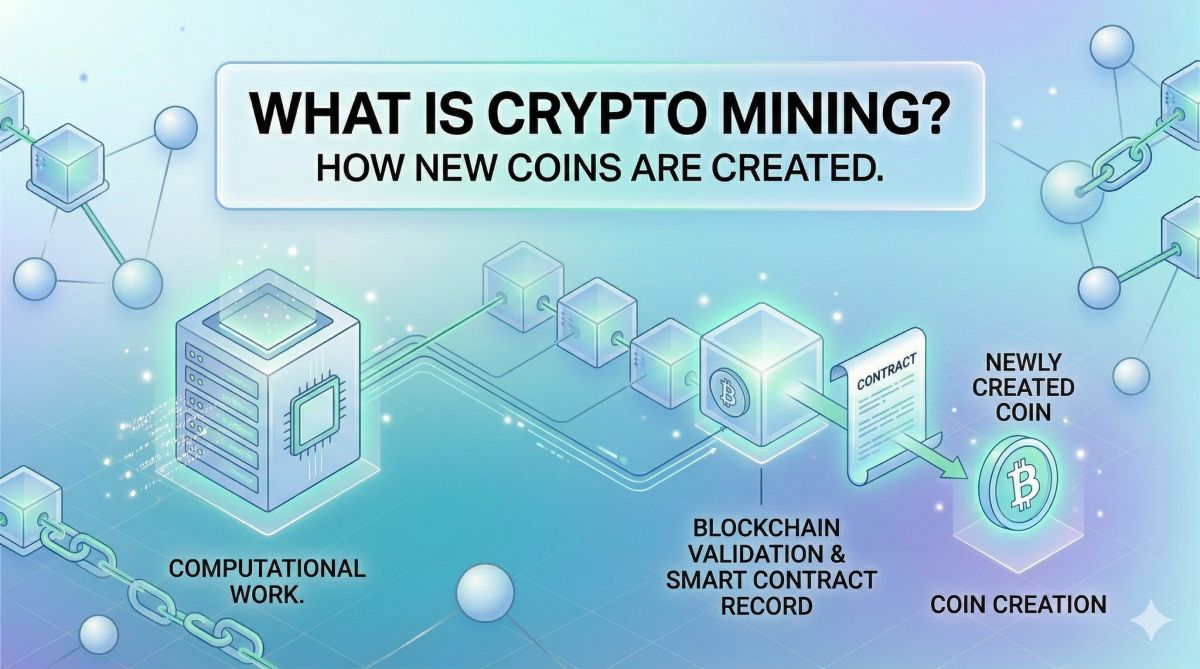
Imagine having a machine in your basement that legally prints money while simultaneously acting as an unhackable security guard for a global financial network. In the early days of Bitcoin, this was essentially what Crypto Mining looked like. Today, mining has evolved into a multi-billion dollar industrial sector and the foundational backbone of the decentralized internet.
At ZanaChain, we believe that to truly grasp the power of Web3, you must understand how digital assets are created and secured without a central bank. In this comprehensive, deep-dive guide, we will explore exactly what crypto mining is, the complex mechanics behind it, the evolution of consensus algorithms, and what the future holds for network validators.
What Is Crypto Mining? The Dual Purpose
When most people hear "crypto mining," they picture digital pickaxes extracting virtual coins from the internet. While "mining" is a helpful analogy to gold mining, it only tells half the story. Crypto mining actually serves two critical, inseparable functions in a blockchain ecosystem:
- Transaction Verification and Security: Miners are the auditors of the blockchain. They verify that a user has enough funds to make a transaction and ensure that no one is "double-spending" their digital money. By bundling these verified transactions into "blocks" and adding them to the chain, miners secure the network against hackers.
- The Creation of New Coins: As a reward for spending their computing power and electricity to secure the network, the blockchain protocol automatically "mints" (creates) brand-new cryptocurrency and awards it to the successful miner. This is the only way new Bitcoins, for example, enter circulation.
How Proof of Work (PoW) Mining Actually Works
The original and most famous form of mining is called Proof of Work (PoW), pioneered by Bitcoin. It is a highly competitive and mathematically intensive process. Here is the step-by-step breakdown of how a block is mined:
Step 1: The Mempool
When you send crypto to a friend, the transaction doesn’t instantly go on the blockchain. First, it goes into a waiting room called the "Memory Pool" or Mempool. Miners select transactions from this pool to include in their next proposed block.
Step 2: The Cryptographic Puzzle (Hashing)
To add their proposed block to the official blockchain, miners must solve a complex cryptographic puzzle. Contrary to popular belief, this isn't a calculus equation; it is a guessing game. Miners use their computers to run data through a cryptographic algorithm (like SHA-256) to generate a random 64-character code called a Hash.
Step 3: Finding the Target Hash
The network sets a "target hash." The first miner whose computer randomly guesses a hash that is equal to or less than the target wins the right to add the block. Because finding this exact hash is incredibly rare, it requires trillions of guesses per second.
Step 4: The Block Reward
Once a miner finds the winning hash, the rest of the network quickly verifies it. The new block is added to the chain, and the winning miner receives the "Block Reward" (newly minted coins) plus the transaction fees paid by the users.
The Evolution of Mining: From CPUs to ASICs
In 2009, you could mine Bitcoin on a standard laptop CPU. As the network grew and the price of Bitcoin skyrocketed, the competition became fierce. The industry evolved rapidly:
- CPU Mining: Using a standard computer processor (Obsolete for major PoW coins).
- GPU Mining: Using powerful graphics cards favored by PC gamers. (This was highly popular for Ethereum before it changed its consensus mechanism).
- ASIC Mining: Application-Specific Integrated Circuits. These are expensive, industrial-grade machines built for one single purpose: mining a specific cryptocurrency algorithm faster than anything else.
Alternatives to Traditional Mining: PoS and Mobile
The massive electricity consumption of PoW mining has led to heavy environmental criticism. This birthed new ways to secure networks and create coins:
Proof of Stake (PoS)
Instead of using energy-hungry machines to solve puzzles, Proof of Stake (used by Ethereum, Solana, and Cardano) requires users to "lock up" or stake their own crypto as collateral to become a validator. If a validator tries to approve fraudulent transactions, their staked crypto is slashed (destroyed). It achieves the same security as PoW but uses 99% less electricity.
Eco-Friendly & Mobile Consensus (The ZanaChain Vision)
The high cost of ASIC machines centralized PoW mining into the hands of a few massive corporations. At ZanaChain, we are deeply interested in ecosystems like the Pi Network, which utilize novel consensus protocols (like the Stellar Consensus Protocol). These allow everyday users to secure the network and earn rewards using lightweight mobile applications without draining their phone batteries or the planet's energy grid. This represents a return to true decentralization.
Cloud Mining: Proceed with Caution
Cloud mining allows users to rent mining hardware located in a remote data center. You pay a monthly fee, and the company sends you the mined crypto. While it sounds appealing because you avoid the noise and heat of running machines at home, the cloud mining industry is unfortunately rife with scams and Ponzi schemes. Always exercise extreme caution.
Frequently Asked Questions (FAQ)
1. Can I still mine Bitcoin on my home computer?
Practically, no. The network difficulty is so high that a standard PC might take thousands of years to find a single block. You must use specialized ASIC miners and join a "Mining Pool" (where thousands of miners combine their power and share the rewards).
2. What is the Bitcoin Halving?
Built into Bitcoin's code is a rule that cuts the block reward in half approximately every four years. This creates artificial scarcity, ensuring that only 21 million Bitcoins will ever exist. The halving heavily impacts a miner's profitability.
3. Is crypto mining legal?
It depends entirely on your jurisdiction. While it is fully legal in most of North America and Europe, countries like China have outright banned commercial crypto mining due to energy concerns and capital flight.
Conclusion
Crypto mining is the beating heart of the decentralized economy. Whether through the industrial hum of ASIC farms or the silent, eco-friendly staking of modern Web3 networks, these validation mechanisms ensure that digital value can be transferred securely without intermediaries. As the landscape shifts towards more sustainable models, ZanaChain will continue to guide our community through the most efficient, accessible, and innovative ways to participate in the Web3 ecosystem.