What Is DeFi? Decentralized Finance Explained
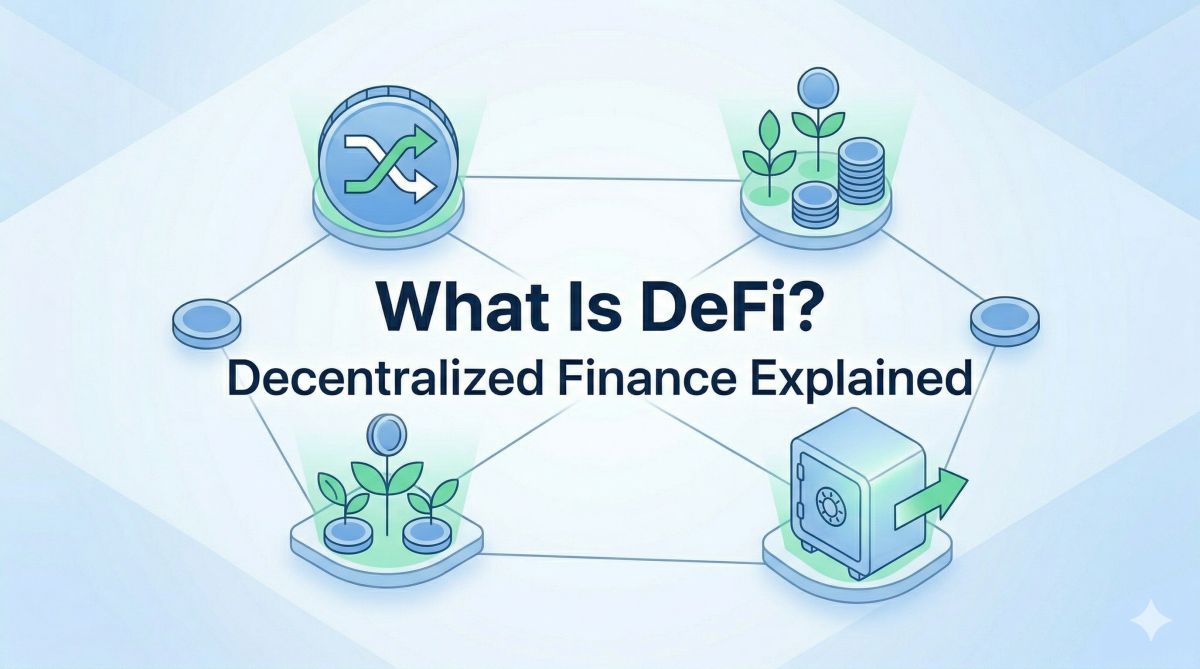
For centuries, the global financial system has been controlled by centralized gatekeepers: banks, brokerages, clearinghouses, and governments. But what if you could borrow, lend, trade, and earn interest globally without ever stepping foot in a bank or asking for permission? Enter Decentralized Finance, commonly known as DeFi.
At ZanaChain, we view DeFi as the ultimate financial equalizer. It is a system where anyone with an internet connection and a Web3 wallet can access premium financial tools. In this comprehensive guide, we will explore what DeFi is, how it operates without middlemen, and why it is disrupting the traditional banking sector.
What Is Decentralized Finance (DeFi)?
DeFi refers to an entire ecosystem of financial applications built on top of public blockchain networks. Unlike traditional finance (often referred to as TradFi), which relies on centralized institutions to hold your money and approve your transactions, DeFi relies on cryptography and decentralized networks.
In the DeFi world, the middleman is completely replaced by lines of code. You don't have a bank account; you have a digital wallet. You don't sign paper contracts; you interact with automated digital protocols.
How Does DeFi Actually Work?
The secret ingredient behind the entire DeFi ecosystem is the Smart Contract (which we covered in our previous Web3 guides). Here is how these automated agreements create a functioning financial system:
1. Replacing the Bank with Code
In traditional banking, if you want a loan, the bank checks your credit score, takes your collateral, and gives you the money. In DeFi, a smart contract does this automatically. You lock up your digital assets as collateral into the smart contract, and it instantly releases the loan to your wallet. No paperwork, no bias, no waiting days for approval.
2. Liquidity Pools Instead of Vaults
Instead of a central bank holding all the cash, DeFi relies on "Liquidity Pools." These are massive digital pots of cryptocurrency provided by regular users. In exchange for providing their assets to the pool (so others can trade or borrow), these users earn a share of the transaction fees.
Core Services in the DeFi Ecosystem
The DeFi space has evolved to offer almost every service a traditional bank provides, but with a Web3 twist:
- Decentralized Exchanges (DEXs): Platforms where users can trade one cryptocurrency for another directly peer-to-peer, without needing a centralized exchange like Binance or Coinbase.
- Lending and Borrowing: Users can lend their crypto to earn high-yield interest or borrow crypto by providing collateral, all governed by smart contracts.
- Staking and Yield Farming: Advanced methods of locking up your digital assets in a protocol to earn rewards and generate passive income.
The Revolutionary Benefits of DeFi
Why are billions of dollars flowing into decentralized finance? The advantages over the old system are undeniable:
- Permissionless Access: There are no credit checks, no KYC (Know Your Customer) hurdles, and no geographical restrictions. If you have a wallet, you are in.
- Total Transparency: Every transaction, loan, and liquidity pool is recorded on a public blockchain. Anyone can audit the code and the flow of funds, making hidden corporate fraud nearly impossible.
- Self-Custody: "Not your keys, not your coins." In DeFi, you retain 100% control of your assets. The platform never actually takes ownership of your money.
- 24/7/365 Markets: The blockchain never sleeps. There are no weekend closures or bank holidays.
The Future is Open
While Ethereum was the pioneer of the DeFi movement, today, countless networks—including community-driven ecosystems like Pi Network—are exploring and integrating decentralized financial utilities. However, with great power comes great responsibility; the space is still experimental and carries risks like smart contract bugs or market volatility.
At ZanaChain, we are committed to building, educating, and highlighting dApps that make these complex financial tools more accessible, secure, and user-friendly for everyone. Welcome to the future of finance.